Peak-hour throughput
Lane width, lane count, and mechanism speed are calculated to keep queues under control.

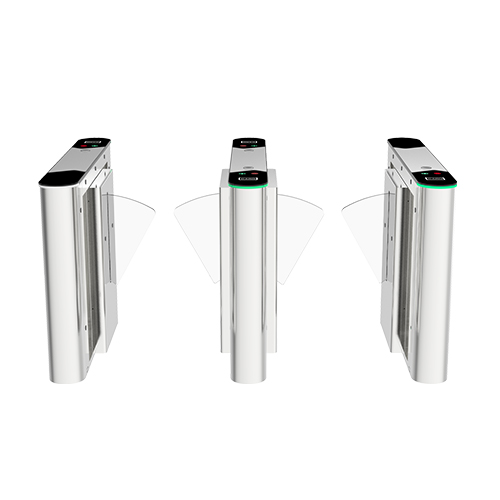
Security Systems
Tripod turnstiles, flap barriers, and swing gates with identity verification and emergency modes.
Discuss your projectAbout the solution
Gate selection considers lane width, target throughput, accessibility, security level, and evacuation behavior—not appearance alone.
Problems the system must solve
What we engineer into the system
Lane width, lane count, and mechanism speed are calculated to keep queues under control.
Face, fingerprint, RFID card, QR, and ticket credentials can trigger the gate through a suitable controller.
Sensors detect users within the mechanism so arms or flaps do not close while the lane is occupied.
Tripods can drop their arms and flap or swing gates can open when power is lost or an emergency signal is received.
SUS304 cabinets provide corrosion resistance and an easy-to-maintain surface in high-traffic areas.
Equipment and solution scope
The final configuration follows site conditions, integration needs, and actual usage patterns.
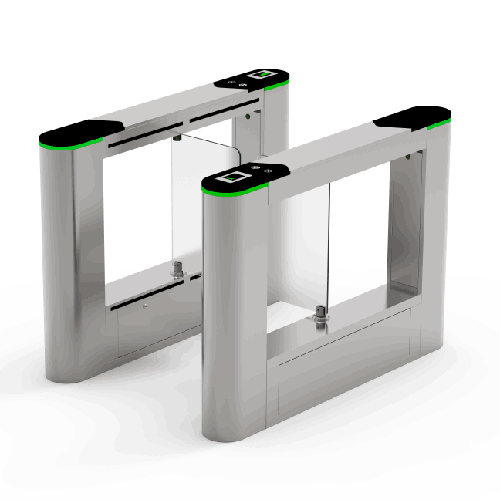
A modular swing barrier with a wider lane and replaceable readers for accessible entry.
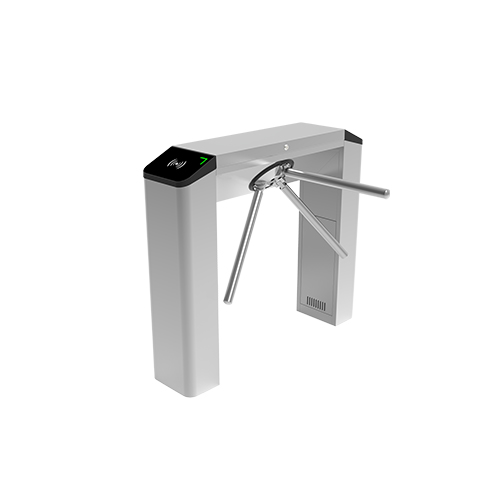
Durable, space-efficient SUS304 tripod turnstiles for high-traffic areas.
A modular flap barrier for modern lobbies, offering fast entry and flexible reader integration.
The same team carries project context from planning until the system is ready to operate.
We map site conditions, usage patterns, risks, and operating goals before selecting equipment.
Topology, device locations, integrations, specifications, cost, and schedule are documented in a transparent scope.
Technicians complete mounting, cabling, network configuration, and integration with a tidy installation standard.
Operating scenarios are tested, operators are trained, and system documentation is handed over before go-live.
Tripods are robust and economical; flap barriers are fast and compact for lobbies; swing gates provide wider accessible lanes.
Fail-safe behavior is configured so lanes open or arms drop during power loss or a fire-alarm event.
Yes, with a suitable model and protection. A canopy is still recommended to shield electronics from direct exposure.
Our team can help assess equipment options, integration requirements, and the right implementation scope.